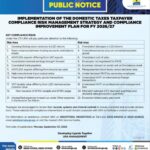
There is a sentence that is quietly making many landlords and wealthy individuals uncomfortable in Uganda right now:
“Your lifestyle must match your tax records.”
For years, Uganda’s tax system has heavily depended on salaried employees. If you worked in a company, Pay As You Earn (PAYE) was deducted automatically before your salary even reached your account. Government workers, bank employees, telecom staff, and people in formal employment have carried a huge portion of the tax burden for a long time.
But outside formal employment, a completely different economy was growing quietly.
An economy built on: rental apartments, side consultancies, private clinics, brokerage deals, influencers, cash businesses, construction projects, commission income, land speculation, professional services, and informal trade
And for years, much of this money stayed partially invisible. Someone could own multiple apartments in Najjera, Kyanja, Bweyogerere, Bugolobi, or Munyonyo and still appear “low income” on paper. A consultant could earn millions monthly through personal transactions without structured declarations. A professional could live comfortably, drive expensive cars, pay international school fees, and build rentals, yet officially declare very little taxable income.
That reality is what Uganda Revenue Authority (URA) is now trying to change.

Uganda is entering a new phase of taxation, one where the government is aggressively shifting focus toward High-Net-Worth Individuals (HNWIs), landlords, professionals, and people earning substantial income outside traditional salary systems. The proposed changes under the Income Tax (Amendment) Bill, 2026, and the Tax Procedures Code (Amendment) Bill, 2026, show that the government is no longer satisfied relying mainly on formal employees for revenue collection.
But this shift has started making many wealthy Ugandans uncomfortable.
Because the conversation is no longer simply about filing taxes. It is now about whether your visible lifestyle matches the income you declare.
Uganda’s tax burden has historically fallen on the same people
One reason the government is intensifying this campaign is that Uganda’s tax structure has historically leaned heavily on formal workers and compliant businesses.
A salaried employee earning Shs5 million per month may consistently pay PAYE every month without fail. Their taxes are automatic, structured, and visible.
But meanwhile, a landlord collecting Shs20 million in monthly rent, a consultant billing client privately, a contractor operating through cash transactions, a trader importing high-value goods, or a professional running side businesses informally may contribute far less to the tax system. This imbalance has frustrated policymakers for years.
From the government’s perspective, there is a large amount of untaxed or under-taxed income circulating in the economy, especially among people whose wealth is asset-based rather than salary-based.
And this is where the term High-Net-Worth Individuals becomes important.
URA has increasingly developed taxpayer profiling systems targeting people with large property ownership, high-value imports, luxury vehicles, substantial land transactions, company shareholding, and visible wealth indicators.
The logic is straightforward: If someone appears financially successful, the government expects their tax records to reflect that success.
Why rental income has become URA’s biggest target
Among all income categories, rental income has become one of the easiest for URA to monitor.
Why? Because buildings are visible.
Unlike informal businesses that can move locations, disappear temporarily, or operate quietly, property leaves traces everywhere through land titles, tenants, utility bills, neighbors know the owner, local authorities know the property, agents and caretakers exist, and construction approvals.
In fact, the government has already made major progress in identifying landlords. According to a study by the International Centre for Tax and Development (ICTD), Uganda expanded its rental taxpayer register from just over 10,000 taxpayers in FY2013/14 to more than 220,000 taxpayers by FY2023/24.
That growth is huge. But registration alone is not enough.
The biggest challenge URA now faces is converting registered taxpayers into fully compliant taxpayers.
Because many landlords are still under-declaring rental income, filing late, filing nil returns, avoiding proper documentation, and operating mostly through cash collections.

The Government’s new strategy is about data, visibility, and connected systems.
One of the biggest mistakes people make is assuming URA still operates the way it did 10 or 15 years ago. It does not.
Uganda’s tax administration is becoming increasingly digital and data-driven.
The proposed Tax Procedures Code (Amendment) Bill, 2026, seeks to make the National Identification Number (NIN) effectively function as a Tax Identification Number (TIN).
That may sound technical, but its implications are massive. It means the government wants one connected financial identity for every taxpayer. Over time, this allows different systems to “talk” to each other:
- property ownership
- business registration
- banking activity
- vehicle ownership
- imports
- tax records
- government transactions
Once information becomes connected, hiding income becomes much harder.
For example, imagine someone owns several apartments, drives luxury vehicles, regularly buys land, builds commercial property, and makes large bank transactions…but officially declares almost no income. That mismatch increasingly becomes visible.
Uganda’s economy has long relied on informality. A lot of wealth was accumulated quietly, without sophisticated accounting structures or proper reporting systems. But the government is now trying to formalise more of that wealth.
What this means for landlords
Many landlords have traditionally managed property informally: rent collected through caretakers, verbal tenancy agreements, cash payments, limited bookkeeping, and little separation between personal and rental finances.
That informality is becoming risky.
The proposed reforms, combined with URA’s broader strategy, suggest landlords should expect: increased compliance monitoring, stronger audit activity, tighter filing requirements, more digital reporting, and closer scrutiny of undeclared property income.
The Income Tax (Amendment) Bill, 2026, also proposes allowing monthly provisional rental tax returns.
That indicates URA wants rental tax reporting to become more regular and more trackable instead of relying mainly on annual filings.
And many landlords already feel unfairly targeted.
Some argue that construction materials are expensive, loans are expensive, tenants delay payments, maintenance costs are rising, utility bills are unpredictable, and vacancy periods hurt cash flow.
So, when the government increases pressure on rental taxation, many landlords feel attacked instead of supported.
Uganda’s housing sector is already under pressure. Some landlords may simply push the burden onto tenants through higher rent. This means ordinary Ugandans could indirectly pay the price.
Others may restructure ownership through companies to improve tax planning, while some smaller landlords may struggle with the administrative burden altogether.
And tenants may eventually feel the impact through stricter payment terms, formal tenancy agreements, reduced flexibility, and increased rent adjustments.
In many ways, this shift affects the entire housing market, not just landlords.
The bigger fear nobody wants to admit
Many wealthy people are not actually afraid of paying taxes. They are afraid of visibility because once systems become connected, the question changes from: “Did you file taxes?” to: “Does your declared income realistically explain your lifestyle?”
And that is a much more uncomfortable conversation.
Someone may own luxury apartments, expensive vehicles, multiple plots of land, schools, commercial buildings, and profitable side businesses, yet officially appear almost financially inactive.
URA’s growing use of data analytics threatens that invisibility. That is why this new tax direction feels personal for so many people.
But to be fair, the government also has a point.
Uganda needs money. Infrastructure projects, healthcare, electricity, security, public salaries, and road construction all require revenue. At the same time, the country’s debt burden continues to rise, and the government wants to reduce dependence on borrowing and donor support.
From that perspective, widening the tax base makes economic sense. The government argues that taxation has been unfairly concentrated on compliant salaried workers for too long, while significant informal wealth has remained lightly taxed.
Many ordinary workers agree with that argument. A formal employee paying PAYE every month may wonder why someone earning much more through rentals or side businesses contributes far less. That frustration is partly driving this policy direction.
Uganda is quietly entering a new tax era.
The biggest mistake landlords and wealthy individuals can make now is assuming this is just another temporary URA operation.
It is not. This is part of a long-term transformation towards data-driven taxation and broader financial visibility. The systems are becoming smarter. The databases are becoming connected. The monitoring is becoming more sophisticated. And informal wealth is becoming harder to hide.
The bigger question is whether Uganda can build a tax system people genuinely trust.
“If people pay more taxes, will they actually see better services?”
Because compliance is easier when citizens trust where the money goes. That trust problem is real.
Unless that trust improves, every new tax campaign will always feel emotionally charged because tax compliance is not only about fear or enforcement. People comply more willingly when they believe the system is fair, public funds are properly used, corruption is controlled, everyone contributes equally, and taxation feels transparent.
There is also fear about selective enforcement.
Some business owners worry that smaller landlords and professionals may face pressure while larger, politically connected individuals remain protected.
Without public trust, resistance will always remain.
But regardless of where one stands in this debate, one thing is becoming impossible to ignore: Uganda’s tax conversation is changing.
For landlords, professionals, and high-net-worth individuals, the era of quietly operating outside the spotlight may slowly be coming to an end.