Customs Advisory
Uganda Revenue Authority's customs function enforces one of East Africa's most active border regimes. Correct HS classification, accurate valuation, and well-structured documentation are not optional — they are the difference between smooth clearance and costly delays, penalties, or seizures.
Import & Export Compliance
Correct HS code classification and customs valuation are the foundation of compliant import/export operations. Errors here cascade into penalty assessments, shipment holds, and audit flags. We review and validate your declarations, ensuring every shipment is correctly classified, valued per WTO methods, and fully documented.
- HS tariff code classification review & advice
- Customs valuation methodology (WTO rules)
- Import/export documentation review
- URA customs portal compliance support
Tariff Optimisation
Uganda's membership of the EAC, COMESA, and AfCFTA creates a network of preferential tariff regimes and duty exemption mechanisms that many importers fail to fully exploit. We identify every legitimate opportunity to reduce your import duty burden — through correct classification, preferential origin rules, or applicable remission schemes.
- EAC common external tariff (CET) planning
- COMESA & AfCFTA preferential origin analysis
- Duty remission & exemption advisory
- Bonded warehouse & special regime structuring
Customs Audits & Disputes
URA customs audits can result in significant retroactive duty assessments, surcharges, and compliance penalties if not handled by specialists who understand both the technical law and URA's audit methodology. We represent you throughout the process — from initial query response to formal appeal — protecting your business from inflated or unjustified assessments.
- URA customs audit query responses
- Duty assessment objections & appeals
- Post-clearance amendment filings
- Penalty waiver negotiations with URA
Supply Chain Structuring
A well-structured cross-border supply chain reduces landed costs, minimises duty leakage, and ensures goods flow smoothly through Uganda's customs environment. We analyse your import and distribution model, identify structural inefficiencies, and recommend optimised arrangements — particularly for businesses trading within the EAC and COMESA corridors.
- Import structure review & optimisation
- Regional trade corridor advisory (EAC/COMESA)
- Agent & intermediary arrangements review
- Customs compliance SOPs for operations teams
International Tax Advisory
Cross-border business creates cross-border tax obligations. From withholding taxes on foreign service payments to permanent establishment exposure and VAT on digital services, the international tax landscape is increasingly complex — and increasingly enforced.
Cross-Border Tax Planning
Effective cross-border tax planning goes far beyond filing returns in multiple countries. We help businesses structure their international operations to minimise aggregate tax liability — considering permanent establishment risk, intra-group service arrangements, holding company structures, and the interaction between Uganda's domestic tax rules and applicable treaties.
- International holding & operating structure advisory
- Permanent establishment risk assessment
- Intra-group service & IP arrangement planning
- Regional expansion tax impact modelling
Transfer Pricing
As an element of our international tax service, we provide transfer pricing advisory for businesses with cross-border related-party transactions — developing arm's length pricing policies, preparing compliant documentation, and advising on Uganda's increasingly OECD-aligned TP regulations. For dedicated full-scope TP engagements, see our Transfer Pricing Advisory service.
- Related-party transaction identification
- TP policy design & arm's length benchmarking
- Uganda TP disclosure & documentation requirements
- TP audit risk review & health check
VAT / GST & Indirect Taxes
International VAT and indirect tax obligations have expanded dramatically — particularly for digital and service businesses operating across multiple jurisdictions. We advise on cross-border VAT treatment, foreign VAT recovery opportunities, reverse-charge mechanisms, and the impact of digital services tax rules applicable in Uganda and EAC partner states.
- Cross-border VAT treatment advisory
- Digital services tax compliance (Uganda & EAC)
- Input VAT recovery on imports & foreign payments
- Multi-jurisdiction VAT registration advisory
Withholding Tax & Double Tax Treaties
Uganda levies withholding tax on dividends, royalties, management fees, and service payments made to non-residents at rates that can be significantly reduced — or eliminated — under Uganda's double taxation treaties. Many businesses pay avoidable WHT simply because no one has reviewed their payment structures against the treaty network. We do that review systematically.
- WHT rate review & treaty mapping
- Treaty eligibility & residency certificate advisory
- Dividend, royalty & interest payment structuring
- URA WHT return filing & compliance support
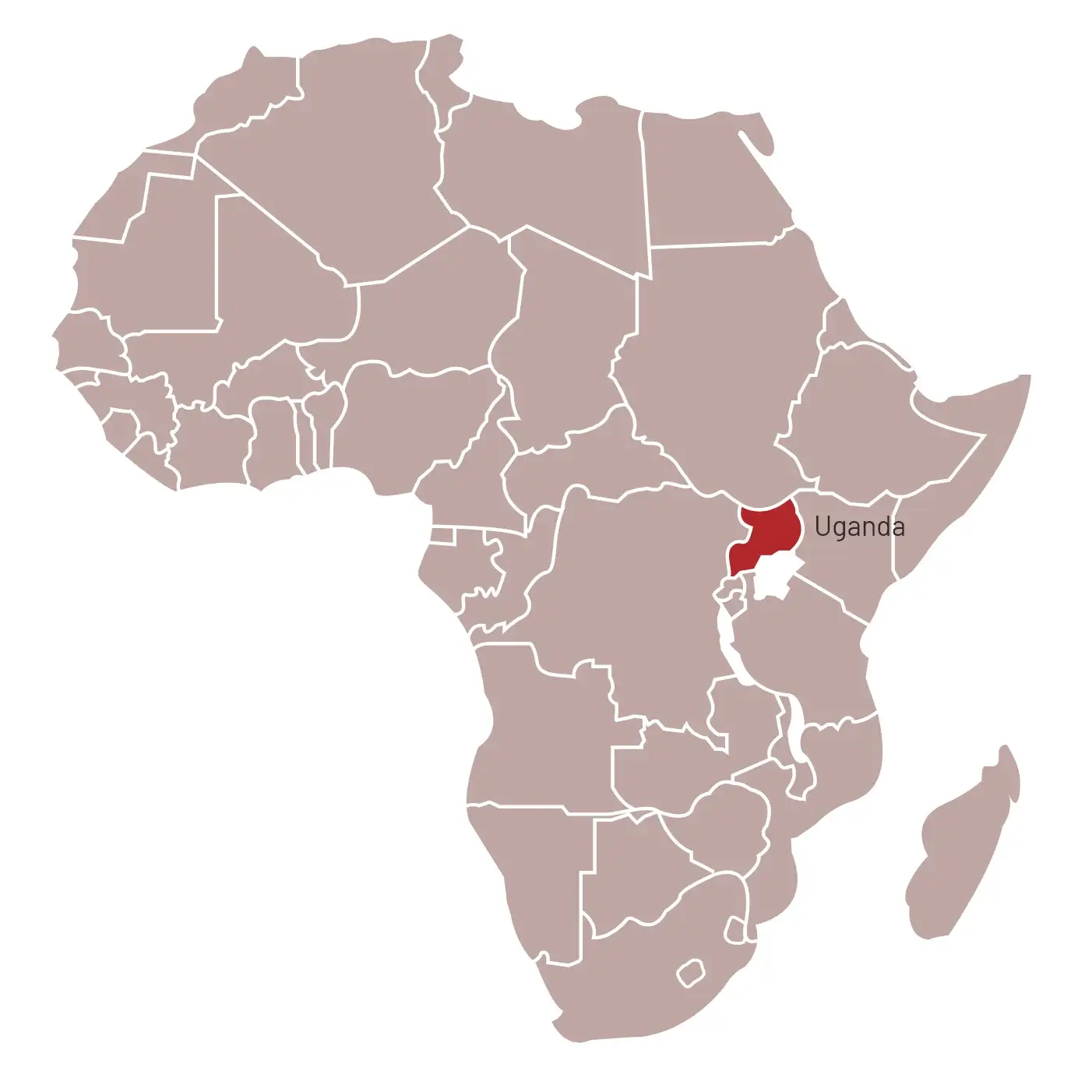
Uganda & the Wider
East African Region
Our customs and international tax expertise is grounded in Uganda but extends across the full East African Community and COMESA trade corridors — the markets our clients trade with most.








Global Expertise.
Local Precision.
We combine deep knowledge of Uganda's customs laws and international tax frameworks with practical, business-first solutions that align compliance with your commercial goals.
Global Expertise
Our team combines deep knowledge of Uganda's customs laws and international tax frameworks — giving you integrated advice that covers both dimensions seamlessly.
Practical Solutions
We don't just identify tax obligations — we align compliance strategies directly with your business goals, so advisory translates into real operational and financial outcomes.
Risk Management
Proactive planning significantly reduces your exposure to customs penalties, unexpected duty assessments, and international tax disputes before they crystallise into costly problems.
End-to-End Support
From strategic tax structuring and treaty analysis at the planning stage through to operational customs clearance support — we are with you at every step of the cross-border journey.
Built for International
Business in Uganda
From first-time importers to global multinationals — if your business crosses a border, we have a solution for you.
Importers & Exporters
Businesses moving goods across Uganda's borders — from manufacturers sourcing inputs to distributors exporting finished goods across the EAC.
Multinational Corporations
Regional and global companies with Uganda operations that require integrated cross-border tax structuring, TP compliance, and treaty relief advisory.
E-Commerce Businesses
Digital-first businesses expanding globally — navigating digital services VAT, cross-border payment WHT, and multi-jurisdiction income tax obligations.
Logistics & Supply Chain
Freight forwarders, clearing agents, and logistics companies operating across Uganda's border posts and regional trade corridors.
Start-ups Going International
Ugandan start-ups expanding into new East African markets — needing guidance on multi-country tax obligations, PE risk, and optimal cross-border business structures.
Frequently Asked
Questions
Cross-border tax is complex. Here are the questions we hear most from businesses operating in Uganda's international trade environment.
Ready to Trade Across Borders
with Total Confidence?
Let Demo Consult handle the customs complexity and international tax structuring — so you can focus on building your cross-border business without exposure or surprises.